
How Often Should You Wax Ravin Crossbow Strings?
Ravin’s maintenance guidance says to wax the exposed strings and cables every 75 to 100 shots—or at the beginning of each shooting session if you do not shoot often. Do not wax the center serving.
Estimated reading time: 8 minutes
- ✓Learn exactly which parts should be waxed
- ✓Understand why the center serving must stay wax-free
- ✓Follow a simple beginner waxing routine
SEO Title: How Often Should You Wax Ravin Crossbow Strings?
Meta Description: Learn how often to wax Ravin crossbow strings and cables, where to apply wax, what not to wax, and the beginner mistakes to avoid.
Suggested URL Slug: /how-often-should-you-wax-ravin-crossbow-strings/
Table of Contents
Quick Answer Why Waxing Matters What Parts Should Be Waxed? What Should Never Be Waxed? Step-by-Step Waxing Instructions Waxing Schedule Inspect Before You Wax Common Beginner Mistakes Troubleshooting Recommended Gear Related Maintenance Guides FAQ Final ThoughtsQuick Answer
Ravin’s maintenance guidance says to wax the exposed strings and cables every 75 to 100 shots. If you shoot only occasionally, Ravin says to wax them at the beginning of each shooting session.
The most important exception is the center serving. Ravin says not to wax the center serving because wax can build up in the trigger mechanism and create a possible malfunction.
Why Waxing Ravin Strings and Cables Matters
Crossbow strings and cables are made from high-strength fibers, but those fibers still face friction, tension, weather, and repeated movement.
Wax helps reduce dryness and surface wear. It also helps protect the fibers from dirt and moisture. Ravin specifically explains that regular waxing can extend the life of the strings and cables.
This does not mean wax can repair damage. Wax is preventive maintenance. If you see broken strands, deep cuts, heavy fuzz, or serving separation, stop shooting and replace the worn components.
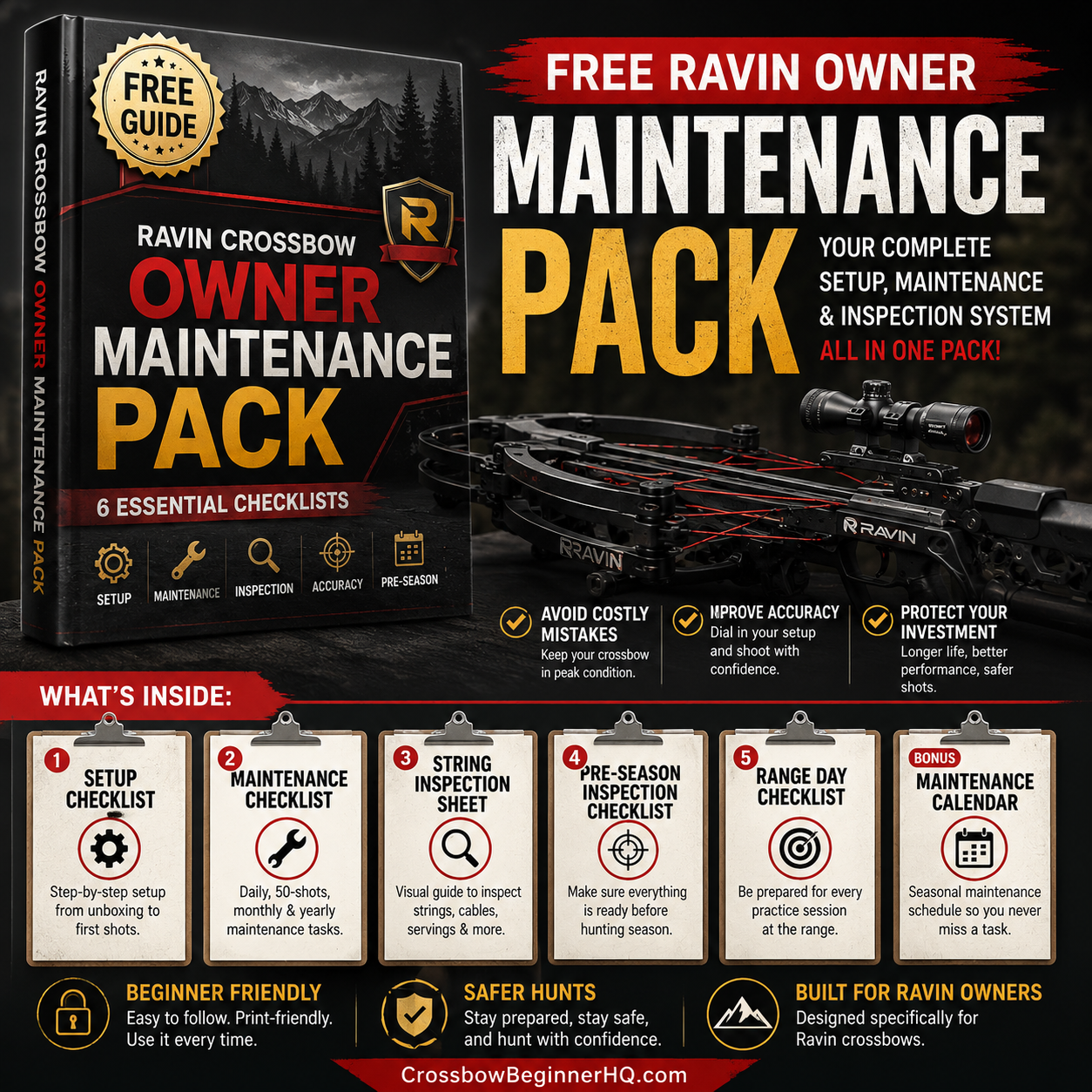
Get The Free Ravin Owner Maintenance Pack
Avoid costly beginner mistakes with six printable Ravin owner resources.
- ✓ Beginner Setup Checklist
- ✓ Maintenance Checklist
- ✓ String Inspection Sheet
- ✓ Pre-Season Inspection Checklist
- ✓ Range Day Checklist
- ✓ Maintenance Calendar
What Parts of a Ravin Crossbow Should Be Waxed?
Apply wax to the exposed bowstring and cables. These are the visible fiber sections outside the center serving.
Ravin’s video instructs owners to apply a liberal amount of wax and rub it into the strings and cables. The goal is to coat the fibers without leaving thick clumps sitting on the surface.
Main Bowstring
Wax the exposed string fibers outside the center-serving area.
Crossbow Cables
Wax the visible cable fibers that are accessible for normal maintenance.
Dry-Looking Fibers
Apply wax when the exposed fibers begin to look dry or rough.
What Should Never Be Waxed?
The Center Serving
The center serving is the wrapped section where the Ravin Clip-on Nock engages the string. Ravin says not to wax this area.
Wax on the center serving can be pulled into the trigger mechanism. Over time, that buildup may affect the trigger or anti-dry fire system.
The Trigger Assembly
Do not apply wax, oil, or random lubricant inside the trigger mechanism. If wax has already entered the trigger assembly, contact Ravin service rather than trying to flush it out yourself.
Damaged String Areas
Do not use wax to hide broken fibers, cuts, serving separation, or other damage. Wax cannot restore the strength of a damaged string.
Step-by-Step: How to Wax Ravin Crossbow Strings
Step 1: Make the Crossbow Safe
Put on safety glasses. Make sure the crossbow is unloaded and uncocked. Place it on a stable surface with the muzzle pointed in a safe direction.
Step 2: Inspect Before Applying Wax
Check the exposed string, cables, and center serving. Look for fraying, cuts, loose fibers, flattened areas, or serving separation.
Step 3: Identify the Center Serving
Find the thicker wrapped section where the nock attaches. Do not apply wax to this area.
Step 4: Apply Wax to the Exposed Fibers
Rub the wax along the exposed bowstring and cables. Follow Ravin’s guidance to use enough wax to coat the fibers.
Step 5: Work the Wax Into the Fibers
Use clean fingers to rub the wax into the string and cables. Friction from your fingers helps soften and spread the wax.
Step 6: Remove Heavy Buildup
The fibers should look coated, not buried under thick lumps. Wipe away obvious excess before shooting.
Step 7: Reinspect the Center Serving
Make sure no wax was pushed onto the center serving or toward the trigger area.
Simple Ravin Waxing Schedule
| Shooting Pattern | When to Wax | Extra Check |
|---|---|---|
| Frequent target shooting | Every 75 to 100 shots | Inspect the center serving before each session |
| Occasional shooting | At the beginning of each shooting session | Check for dryness and visible wear |
| Before hunting season | Wax if due based on use and condition | Complete a full string and cable inspection |
| After damp or wet conditions | Dry first, then inspect and wax if needed | Use a soft cloth and store in a cool, dry place |
Inspect Before You Wax
Ravin’s maintenance guidance puts inspection before waxing. Waxing a worn string can hide early warning signs and may encourage a beginner to keep shooting when replacement is needed.
- Check for fuzzy or broken string fibers.
- Look for cuts, flattened areas, or discoloration.
- Inspect the cables near the cams.
- Check the center serving for gaps or separation.
- Replace worn strings and cables immediately.
- Use only Ravin-approved components.
The transcript also states that the strings and cables should be changed about every two years or 200 shots for the models covered by that video. Because Ravin models may use different intervals, confirm the correct schedule in your exact manual.
Common Beginner Waxing Mistakes
Waxing the Center Serving
This can create buildup in the trigger mechanism.
Skipping Inspection
Wax should never be applied before checking for wear or damage.
Using Wax as a Repair
Wax cannot fix cuts, fraying, or serving separation.
Ignoring the Cables
Ravin’s guidance includes waxing both the strings and cables.
Leaving Thick Clumps
Work wax into the fibers and remove heavy excess.
Using the Wrong Product
Use a bowstring wax intended for crossbow strings and follow the manual.
Troubleshooting
The String Still Looks Dry After Waxing
Work a small additional amount into the exposed fibers. Do not keep adding large layers. If the fibers remain rough, fuzzy, or damaged, stop and get a professional inspection.
I Accidentally Waxed the Center Serving
Stop adding wax. Carefully remove visible surface excess without pushing wax toward the trigger. If wax may have entered the trigger assembly, contact Ravin service.
The Center Serving Looks Worn
Do not wax it. Center-serving wear requires inspection. If it is worn, damaged, or separated, replace the strings and cables as Ravin directs.
I Do Not Know When the Strings Were Last Waxed
Inspect them first. If they are healthy, wax the exposed strings and cables before your next shooting session and begin a simple maintenance log.
Recommended Gear
| Item | Why It Helps | Suggested Link |
|---|---|---|
| Crossbow string wax | Protects exposed string and cable fibers | View Ravin Accessories |
| Ravin Serving Fluid | Used for center-serving care where the manual recommends it | View Serving Fluid |
| Replacement strings and cables | Required when wear, damage, or separation appears | View Ravin Strings |
| Safety glasses and soft cloth | Supports safer and cleaner maintenance | Use equipment you already own |
Related Ravin Maintenance Guides
Frequently Asked Questions
How often should you wax Ravin crossbow strings?
Ravin’s video says every 75 to 100 shots, or at the beginning of each shooting session if you do not shoot often.
Should you wax Ravin cables too?
Yes. The transcript instructs owners to wax both the exposed strings and cables.
Should you wax the Ravin center serving?
No. Ravin warns that center-serving wax can build up in the trigger mechanism and may cause a malfunction.
Can wax repair a fuzzy or damaged string?
No. Wax is preventive maintenance. Replace worn or damaged strings and cables.
What should I do after using a Ravin in wet conditions?
Dry it with a soft cloth, inspect the strings and cables, and store it in a cool, dry location.
Final Thoughts
The beginner answer is simple: wax the exposed Ravin strings and cables every 75 to 100 shots, or before each shooting session if you shoot only occasionally.
Keep wax away from the center serving and trigger assembly. Inspect the crossbow before applying anything, and never use wax to cover damage.
A few minutes of careful maintenance can help protect the string system, but your exact Ravin owner’s manual should always control the final schedule and product choice.
Get The Free Ravin Owner Maintenance Pack
Get all six printable Ravin owner resources in one free download.
- ✓ Beginner Setup Checklist
- ✓ Maintenance Checklist
- ✓ String Inspection Sheet
- ✓ Pre-Season Inspection Checklist
- ✓ Range Day Checklist
- ✓ Maintenance Calendar