
How to Store a Ravin Crossbow Properly
Store your Ravin unloaded and fully uncocked in a locked cabinet or safe located in a cool, dry place. Keep it away from extreme heat and cold, and never leave it cocked for more than eight hours.
Estimated reading time: 8 minutes
- ✓Unload and uncock before putting the crossbow away
- ✓Use a secure, cool, and dry storage location
- ✓Inspect strings, cables, serving, arrows, and scope before storage
Table of Contents
Quick Answer Why Proper Storage Matters Step-by-Step Storage Instructions Best Storage Location Should You Use a Crossbow Case? Scope Storage and Care How to Store Ravin Arrows and Nocks Off-Season Storage Checklist Common Storage Mistakes Storage Troubleshooting Recommended Storage Gear Related Maintenance Guides FAQ Final ThoughtsQuick Answer: How Should You Store a Ravin Crossbow?
Store your Ravin crossbow unloaded and fully uncocked in a locked cabinet or safe located in a cool, dry place. Do not expose it to extreme heat or cold, and do not leave it cocked for more than eight hours.
Before storage, inspect the string, cables, center serving, arrows, nocks, arrow rest, cocking strap, and loose parts. If you find damage, do not fire the crossbow again until it has been serviced.
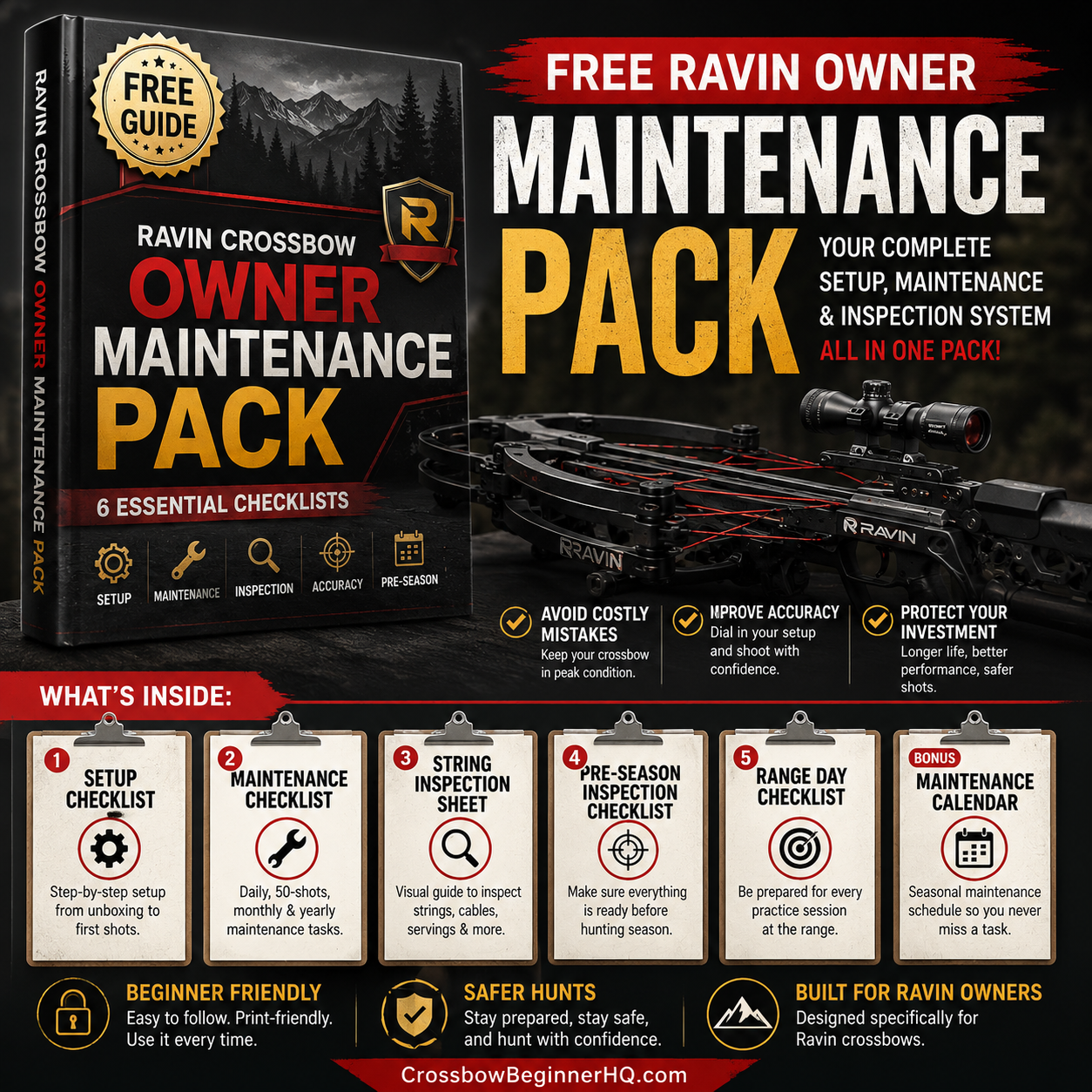
Get The Free Ravin Owner Maintenance Pack
Keep your storage, inspection, setup, and seasonal maintenance tasks organized with six printable resources.
- ✓ Beginner Setup Checklist
- ✓ Maintenance Checklist
- ✓ String Inspection Sheet
- ✓ Pre-Season Inspection Checklist
- ✓ Range Day Checklist
- ✓ Maintenance Calendar
Why Proper Ravin Storage Matters
A Ravin crossbow is a precision weapon. Storage affects safety, security, strings and cables, optics, arrows, and the condition of the cocking system.
The manual places storage inside its safety and maintenance guidance. It instructs owners to keep the crossbow in a locked cabinet or safe, well beyond the reach of children. It also warns against exposing the crossbow to extreme heat or cold.
Proper storage also gives you a clean starting point for your next shooting session. A crossbow that was unloaded, uncocked, inspected, and secured is easier to check before use than one that was put away hurriedly.
Step-by-Step: How to Store a Ravin Crossbow Properly
Step 1: Point the Crossbow in a Safe Direction
Keep the crossbow pointed in a safe direction while unloading and uncocking it. Wear safety glasses and keep all hands and fingers outside the bowstring path.
Step 2: Unload the Arrow
Verify that the safety is in the SAFE position. Follow the unloading instructions in your model’s manual and secure the removed arrow in the quiver or another protected arrow-storage location.
Step 3: Fully Uncock the Crossbow
Use the approved uncocking process for your Ravin model. Do not attempt to uncock it by hand. Maintain control of the draw handle throughout the uncocking cycle.
The R5X/R10X manual notes that the Trac Trigger Firing System may remain connected to the string after the bow has been decocked. The manual says this does not hurt the bow or cause damage.
Step 4: Inspect Before Storage
Look for worn or loose parts. Check the string, cables, center serving, cam timing marks, arrow-rest rollers, cocking strap, arrows, nocks, and accessories.
If the string, cables, or center serving are worn, damaged, fraying, or separated, do not use the crossbow until the correct parts have been replaced.
Step 5: Protect the Scope
Replace the scope’s protective lens covers. Remove external dirt carefully with a soft brush and use the supplied lens cloth or optical-quality lens paper on the lenses.
Step 6: Choose a Locked, Cool, Dry Location
Place the crossbow in a locked cabinet or safe. The location should be cool and dry and well beyond the reach of children or anyone who has not read and understood the manual.
Step 7: Keep the Manual With the Crossbow
Ravin instructs owners to keep the operating manual with the crossbow. This helps ensure that anyone handling it has access to the model-specific safety, unloading, maintenance, and service instructions.
The Best Place to Store a Ravin Crossbow
Locked
Use a locked cabinet or safe to prevent unauthorized access.
Cool
Avoid extreme temperatures and locations that become very hot.
Dry
Choose a dry location that protects the crossbow, scope, and components.
Locations to Avoid
- Unlocked rooms where children or visitors can reach the crossbow
- Locations exposed to extreme heat or cold
- Vehicles on hot days, especially for scope protection
- Areas where the crossbow could be knocked over or handled without permission
- Storage while the crossbow is cocked or loaded
Should You Store a Ravin Crossbow in a Case?
The R5X/R10X manual’s direct storage instruction is to use a locked cabinet or safe in a cool, dry location. It does not require a case as a substitute for secure storage.
A model-compatible case can still be useful for protecting the crossbow during transport and for reducing bumps, dust, and accessory movement. However, the case should not replace the manual’s security requirement.
If you use a case inside a locked cabinet or safe, make sure the crossbow is unloaded and uncocked before closing it.
How to Store the Ravin Scope Properly
Ravin describes the scope as a precision instrument. Do not disassemble it or attempt to clean it internally.
How to Store Ravin Arrows and Nocks
Inspect arrows and nocks before placing them back into storage. Look for chips, cracks, splintering, damaged vanes, and damaged nocks.
Discard damaged arrows immediately. Use only Ravin arrows and orange Ravin Clip-on nocks recommended for your crossbow.
Secure usable arrows in the quiver or another protected holder so the shafts, nocks, and fletching are not crushed or bent.
Off-Season Ravin Storage Checklist
The manual recommends changing strings and cables every two years or 400 shots, whichever comes first, or sooner if damage is visible. Storage time does not remove the need to follow the replacement schedule.
Common Ravin Storage Mistakes
Storing It Cocked
Do not leave the crossbow cocked when it is not in use or unattended.
Leaving an Arrow Loaded
Unload the arrow before uncocking and storage.
Using an Unlocked Location
The manual calls for a locked cabinet or safe beyond the reach of children.
Ignoring Temperature
Do not expose the crossbow or scope to extreme heat or cold.
Skipping Inspection
Putting away damaged equipment can hide a problem until the next hunt.
Cleaning the Trigger Internally
Do not lubricate internal trigger components before storage.
Storage Troubleshooting
I Left My Ravin Cocked Longer Than Eight Hours
Point it in a safe direction, unload it, and follow the model-specific uncocking procedure. Inspect the string, cables, center serving, and cam timing before using it again. Contact Ravin service if anything looks unusual.
The Crossbow Was Stored in a Hot Vehicle
Move it to a safe, normal-temperature location and inspect the crossbow and scope before use. The manual warns that high temperatures can affect scope lubricants and sealants.
The Center Serving Looks Separated After Storage
Do not shoot. Ravin says to replace the string and cables when the center serving is worn, damaged, or separated. Do not re-serve the old bowstring.
The Scope Lost Zero After Storage or Travel
The manual recommends checking point of impact after extended storage or travel. Start at 10 yards, then confirm at 20 yards before attempting longer shots.
The Trac Trigger Box Is Still Attached to the String
According to the manual’s FAQ, the trigger box may remain attached to the string after the bow is decocked. It will not hurt the bow. Before the next use, verify the safety is in the SAFE position and follow the cocking and loading instructions.
Recommended Storage Gear
| Item | Purpose | Suggested Link |
|---|---|---|
| Model-compatible Ravin case | Helps protect the crossbow during transport and inside secure storage | View Ravin Cases |
| Locked cabinet or safe | Provides the secure storage required by the manual | Choose a secure option that fits your crossbow |
| Scope lens cloth and covers | Protects external lens coatings during storage | Use the supplied Ravin accessories |
| Flashlight and inspection cloth | Makes pre-storage inspections easier | Use equipment you already own |
| Genuine Ravin strings and cables | Required if wear or damage is found during inspection | View Ravin Strings |
Related Ravin Maintenance Guides
Frequently Asked Questions
Can you store a Ravin crossbow cocked?
No. Do not leave it cocked when it is not in use or unattended, and do not keep it cocked for more than eight hours.
Should a Ravin be unloaded before storage?
Yes. Unload the arrow and fully uncock the crossbow before storing it.
What temperature is best for Ravin storage?
The manual does not give a numeric temperature range. It says to use a cool, dry location and avoid extreme heat or cold.
Can I store my Ravin in a vehicle?
A vehicle is not a good long-term storage location. The manual specifically warns against storing the scope in vehicles on hot days.
Can the trigger box stay attached to the string during storage?
The R5X/R10X manual says the trigger box may remain connected to the string after the bow is decocked without hurting the bow.
Should I keep the manual with the crossbow?
Yes. Ravin instructs owners to keep the operating manual with the crossbow and transfer it with the crossbow if ownership changes.
Final Thoughts
Proper Ravin storage is simple: unload it, fully uncock it, inspect it, protect the scope, and lock it in a cool, dry cabinet or safe.
Do not leave it cocked for more than eight hours. Do not store it loaded. Avoid extreme heat and cold, and never ignore worn strings, damaged cables, separated center serving, or timing problems.
This guide is based on the Ravin R5X/R10X user manual. Use it as a beginner-friendly companion, but always follow the exact manual for your model.
Get The Free Ravin Owner Maintenance Pack
Download all six printable Ravin owner resources and keep them with your crossbow and operating manual.
- ✓ Beginner Setup Checklist
- ✓ Maintenance Checklist
- ✓ String Inspection Sheet
- ✓ Pre-Season Inspection Checklist
- ✓ Range Day Checklist
- ✓ Maintenance Calendar